
Back to the researcher directory
Senior researcher · Lifetime tribute
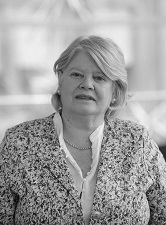
Full Professor
Department of Psychology
Universidad Católica del Uruguay
Dr Lilián Daset is one of the most prominent figures in contemporary psychology in Uruguay and a leading authority in Latin America in the fields of evidence-based psychology, psychological assessment, mental health and subjective psychological well-being. Her academic career, spanning more than three decades, has been devoted to university teaching, scientific research, academic management and the training of researchers.
Her work has extended beyond national borders through intensive international cooperation, joining academic networks in Latin America, the Caribbean, North America and Europe. Her work is distinguished by the combination of methodological rigour, innovation in psychological assessment and a commitment to professional training grounded in scientific evidence.
Those who have worked with her highlight her academic leadership, her capacity for institutional coordination, her commitment to scientific quality and her lasting dedication to building a psychology that is stronger, more accessible and oriented towards human well-being.
Education
Dr Daset completed her studies in Psychology in Uruguay and supplemented her training with graduate studies in Psychology and in the field of university teaching.
In 2005 she earned the degree of Doctor in Psychology from the Universidad de Murcia (Spain), consolidating a research career oriented towards the development of psychological assessment, evidence-based psychology and the study of psychological well-being.
Her training brings together professional practice, scientific research and university teaching, shaping an interdisciplinary profile oriented towards improving health, education and professional training systems in psychology.
Academic career
Dr Daset has developed an extensive career at the Universidad Católica del Uruguay, where she has held positions of high academic and institutional responsibility.
She served as Dean of the School of Psychology for two terms, as well as Institute Director, Director of Research, head of the Publications Centre and Director of the Editorial Board of the journal Ciencias Psicológicas, one of the most significant academic publications in the country. She was also President of the Uruguayan Association of Academic Journals, promoting the strengthening of scientific publishing and editorial quality in the university sphere.
She continues her work as a lecturer and researcher, supervising doctoral theses and taking an active part in graduate and doctoral programmes in Psychology, Education and Health. She maintains a steady role as a guest lecturer at the Universidad de Buenos Aires, in Master’s programmes, and serves as an evaluator of research projects for universities in Uruguay, Latin America and Europe.
Research lines
- Evidence-based psychology, with an emphasis on the methodological quality of professional practice.
- Psychopathology and mental health, through the development of assessment systems that are accessible and grounded in scientific evidence.
- Subjective psychological well-being, incorporating the study of protective factors and the promotion of mental health.
From these axes she has developed assessment protocols, psychological instruments and training proposals for undergraduate and graduate levels, aimed at improving the quality of professional intervention in psychology. Her work is also linked to the development of methodologies that make it possible to obtain higher-quality scientific evidence in clinical, educational and community settings.
Scientific output
Dr Daset maintains an active academic output that includes scientific articles in indexed journals, book chapters, contributions to collective works and the development of psychological assessment instruments.
She is currently part of the development team for the Adult Self-Report, an instrument that complements the Adolescent Self-Report and consolidates a wide-ranging psychological assessment system for different stages of the life cycle. Her output is characterised by the integration of empirical research, methodological development and practical application in health, education and professional training settings.
Selected works and instruments
- The Adolescent Self-Report (ADA), a psychological assessment instrument widely used in clinical and educational settings.
- The development of the Adult Self-Report, currently in the process of publication, which extends the assessment system begun with adolescents.
- Publications and chapters in the areas of evidence-based psychology, psychological assessment and subjective well-being.
- International research on metacognition, psychological assessment and well-being, in collaboration with universities in Latin America, the Caribbean and North America.
- Contributions in the field of positive psychology and psychological well-being, including their academic development in South America.
Academic networks and international cooperation
Dr Daset is a member of the International Group on Metacognition, collaborating with universities in Latin America, the Caribbean and North America on joint research into psychological assessment and cognitive processes.
She takes an active part in international projects on psychological well-being and evidence-based psychology, consolidating academic networks of scientific cooperation across the region. She is an evaluator of research projects for institutions in Uruguay, Latin America and Europe, contributing to the strengthening of scientific quality in the region’s academic output.
Training of researchers and academic management
One of Dr Daset’s most significant contributions has been the training of researchers and the institutional strengthening of psychology in Uruguay. She has supervised numerous Master’s and doctoral theses, promoting rigorous training grounded in scientific evidence.
Her leadership in academic management has contributed to the development of scientific journals, university editorial policies and institutional research structures in psychology.
Legacy
The career of Dr Lilián Daset represents an example of academic leadership, scientific excellence and commitment to the development of psychology in Latin America. Her contribution has been key to the consolidation of an evidence-based psychology, the strengthening of psychological assessment and the promotion of subjective well-being as a central axis of professional practice.
Her legacy lives on in the training of researchers, in the development of assessment instruments and in the consolidation of international academic networks committed to a psychology that is scientific, ethical and oriented towards human well-being.
In her own words
Psychology and the University remain an exciting challenge. Even in childhood I was drawn to inquiry, to seeing what happened when phases were added to or removed from processes — of course I did not think of it in these terms, I simply placed obstacles on the paths of ants, or on anything else my observation could settle upon, and, better still, changed something and stayed very still to see what would happen… only to have to start the experiment over because of the accidents caused by my German shepherd, who adored it whenever the variable was honey or sugar. But what I liked most was learning about people, about their lives, getting to know their stories and their explanations; my grandmother María and also my grandfather Felipe were a great source for this, as were the great-aunts and a large family of uncles, aunts and cousins who gave my curiosity no rest, nor I to it.
When I had to choose my profession, mental health was the field, and so I became a Psychologist at the Universidad de la República in Uruguay. I did graduate studies at the Universidad Católica del Uruguay and, some years later, earned my doctorate in Psychology at the Universidad de Murcia, Spain; a long and beautiful road, not without difficulties, but one that still brings me much joy.
For about twenty years I have worked in the Research Line on Childhood and Adolescence and the one on Psychological Well-being, from which we developed an Assessment Protocol, the Adolescent Self-Report ADA, with an extended instrument and an abbreviated one, along with a sociodemographic survey covering habits and other contextual and family matters, and we included resilience and well-being. This took a great deal of time, and many stages were crowned by undergraduate, Master’s and doctoral theses that I have had, and still have, the honour of supervising; it has all been learning, and the pleasure of working with dedicated people.
University management also crossed my path, at the undergraduate, faculty and scientific-publication levels; I also pursued studies to learn more about models of the university, its history and the place of the development of knowledge and research — another subject that increasingly needs to be travelled in this world of cross-cutting concerns and, at the same time, growing specificity… quite a dilemma.
And there has always been a constant: reading and writing, something that carries me off to longed-for or feared worlds. My most formal work rests on scientific communication and on supporting the development of academic journals from this southern hemisphere, but without losing sight of the fact that we increasingly write for the world. In a less formal exercise I write fiction, when I can, a passion that has accompanied me since childhood.
The focus of my attention in these years is the study of Risk Factors and Protective Factors; what makes us ill and what helps us live better. Thus, work on Psychopathology and Personality and, on the other hand, on Psychological Well-being are the axes around which I structure my work and the deepening of study methodologies in complex areas, and there I arrive at the difficult lands of Evidence-Based Psychology. And here I am, delighted by this perspective made possible by metacognition and its interplay with personality traits.