Back to the researcher directory
Senior researcher · Lifetime tribute
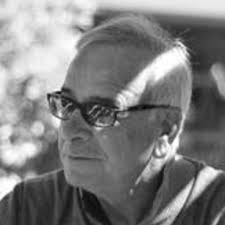
Professor Emeritus
Universidad Complutense de Madrid, Spain
Academic profiles
Dr Aníbal Puente Ferreras is one of the most prominent figures in cognitive and educational psychology in the Ibero-American sphere. His academic career, spanning more than four decades, has been devoted to scientific research, university teaching and the training of researchers, leaving a deep mark on the understanding of cognitive processes, metacognition, reading comprehension and human learning.
His work transcends the borders of Spain and Latin America thanks to a lasting academic cooperation that has strengthened psychological and educational research at many universities. Those who have worked with him highlight not only the rigour of his scientific thinking, but also his intellectual generosity, his commitment to training new generations of researchers, and his conviction that knowledge should be placed at the service of education and human development.
Education
His vocation for education began in Venezuela, where he obtained the qualification of Primary-education Teacher at the La Salle Normal School in 1967. He then studied at the School of Education of the University of Valencia (Venezuela), completing the first university cycle in Education in 1968.
In 1973 he earned his Bachelor’s degree in Psychology at the Universidad Católica Andrés Bello, in Caracas, an institution where he began a solid grounding in scientific psychology that would guide his entire professional career.
Convinced of the importance of integrating experimental research with the understanding of cognitive processes, he continued his training in the United States and, in 1983, earned his PhD in Experimental Psychology and Cognitive Science at Tulane University. In 1984 he also completed a Master’s in Experimental Analysis of Behaviour at the Universidad Central de Venezuela, reinforcing his specialisation in experimental methodology.
This combination of pedagogical, psychological and experimental training defines the interdisciplinary character of his entire body of scientific work.
Academic career
Dr Puente Ferreras developed much of his career as a professor and researcher at the Universidad Complutense de Madrid, where he taught and carried out research in the area of Basic Psychology. In 1993 he was appointed Catedrático de Escuela Universitaria (Full Professor at university-school level), a distinction reserved for academics of outstanding scientific and teaching careers, and he later obtained accreditation for the body of University Full Professors (Catedráticos de Universidad).
His work extended far beyond the European sphere through intense collaboration with universities in Latin America. He maintained an especially close relationship with the Universidad Andrés Bello of Chile, where he took part as a professor and researcher, contributing to the strengthening of doctoral programmes, research projects, thesis supervision and the training of young researchers.
He also developed scientific-collaboration networks with universities in Chile, Colombia, Puerto Rico, Peru and the United States, promoting joint projects and fostering the internationalisation of research in cognitive psychology and education.
Research lines
- Cognitive psychology
- Experimental psychology
- Cognitive science
- Psychology of learning
- Reading comprehension
- Metacognition
- Executive functions
- Neuropsychology of learning
- Psychological assessment
- Learning difficulties
- Inclusive education
- Cognitive and metacognitive strategies
His research has helped to understand how people learn, read, regulate their thinking and develop cognitive skills, providing assessment and intervention models that are widely used in education.
Scientific output
His academic output comprises more than a hundred publications, including books, book chapters and scientific articles in prestigious national and international journals. His work has had a decisive influence on the training of psychologists, educators and researchers in Spain and Latin America, and it remains a reference in the study of cognition, learning and education.
Most influential works
Comprensión de la lectura y acción docente (1991)
A pioneering work that integrated the contributions of cognitive psychology with educational practice, becoming one of the first texts in Spanish devoted to the scientific study of reading comprehension.
Estilos de aprendizaje y enseñanza (1994)
It analyses individual differences in learning and proposes pedagogical strategies grounded in psychological research. It was widely used in teacher-training programmes in several Ibero-American countries.
Cognición y aprendizaje: fundamentos psicológicos (1998, with later expanded editions)
Considered one of his most important works, it offers a rigorous synthesis of the cognitive processes involved in human learning: attention, memory, language, thinking, problem-solving and metacognition. For more than two decades it has been a reference text in Cognitive Psychology and Psychology of Learning courses.
El cerebro creador: ¿qué hacer para que el cerebro sea más eficaz? (1999)
A science-popularisation work that explains, in an accessible way, the neuropsychological foundations of creativity, learning and the development of cognitive potential, bringing scientific knowledge closer to teachers, students and the general public.
Prácticas de cognición y aprendizaje: fundamentos psicológicos (2002)
Conceived as a complement to the previous work, it incorporates exercises, case studies and activities designed to facilitate the application of cognitive models in university training.
Los orígenes del lenguaje (2005)
It explores the developmental evolution of language from an interdisciplinary perspective, integrating contributions from psychology, linguistics and the neurosciences.
Most influential articles
Alongside his books, Dr Puente Ferreras has made contributions through widely cited research in the international scientific literature. These include his studies on the Reading Awareness Scale (ESCOLA) for the assessment of metacognition, reading comprehension in children and adolescents, the assessment of reading precursors, metacognitive strategies applied to learning, and the cognitive difficulties associated with ADHD, Fragile X syndrome, Williams syndrome and other neurodevelopmental disorders.
His research has contributed to the development of psychological-assessment instruments used in educational and clinical settings, fostering a better understanding of the processes involved in reading, writing and learning.
Researcher training and academic networks
One of Dr Puente Ferreras’s greatest legacies is the training of researchers. Throughout his career he has supervised numerous doctoral and Master’s theses, promoting the development of new generations of academics in Spain, Chile, Colombia and other Latin American countries.
His scientific leadership has made it possible to consolidate international research networks between European and Latin American universities, fostering collaborative projects, joint publications and academic exchanges that have strengthened the development of cognitive and educational psychology in Ibero-America.
Legacy
The career of Dr Aníbal Puente Ferreras is an example of academic excellence, commitment to research and a vocation for teaching. His scientific work has contributed decisively to the understanding of the cognitive processes involved in learning, reading and the self-regulation of knowledge, while his teaching has left a deep mark on hundreds of professionals and researchers who continue to carry forward his legacy.
Beyond his publications and academic distinctions, his greatest contribution lies in having formed an international community of researchers committed to the advancement of scientific psychology and to building an education based on evidence. His thinking, his books and his research continue to be a source of inspiration for those who devote their lives to the study of the human mind and the improvement of educational processes.
In his own words
From an early age I became interested in children’s literacy, and for that reason I entered the La Salle University School, where I earned the qualification of Primary-school Teacher. On completing this first level of training, I joined a public school as a teacher of children aged 6 to 8. The need for further training and specialisation led me to enrol in the General Pedagogy degree for three years, but I did not complete this training due to a change of residence.
The degree that finally captivated me was Educational Psychology, with five years of training and experience working with children and adolescents with special and diverse educational needs. I earned my Bachelor’s degree at the Universidad Católica Andrés Bello (Caracas), run by the Jesuit Fathers, a university with a strong vocation for social and scientific training. As a psychologist I discovered the importance of psychology as a factor of social and human transformation.
For four years I worked as a secondary-education teacher, teaching Language and Psychology to adolescents. My Bachelor’s thesis and the impact of Professor Pitaluga as its supervisor influenced almost a decade of my professional work as a shaper of behaviours and contexts, following the guidelines and philosophy of radical behaviourism.
With the aim of continuing my graduate training in behaviourist psychology, I enrolled in a Master’s programme at the Universidad Central de Venezuela entitled “Experimental Analysis of Behaviour”, two years long and with a final thesis defence. At the same time, I took courses in another Master’s in “Behaviour Modification” at the Universidad Simón Bolívar in Caracas.
With this solid academic and research training, I obtained a scholarship to enter the doctoral programme at Tulane University, in the United States. Entering the doctorate opened diverse horizons for me, more in tune with the changes taking place in the field of modern psychology, and I therefore decided to move from the behaviourist approach to a more experimental cognitive one.
Once I finished the doctorate, I began a significant change in professional and scientific terms. I redirected my interests towards the university sphere of teaching and research. The experimental cognitive model inspired my work in the Master’s and Doctoral programmes of various universities in Latin America and Spain. My scientific-output phase formally began with the doctoral thesis in 1983 and with the successive works up to the present day. For the last thirty years I have worked as a Full Professor of Basic Psychology at the Universidad Complutense de Madrid, training psychologists and social workers, focusing my teaching and research on the areas of Language, Reading and Writing, and directing two Master’s programmes at the Universidad Católica Andrés Bello (Caracas), the Universidad Complutense de Madrid and the Universidad Andrés Bello (Chile).